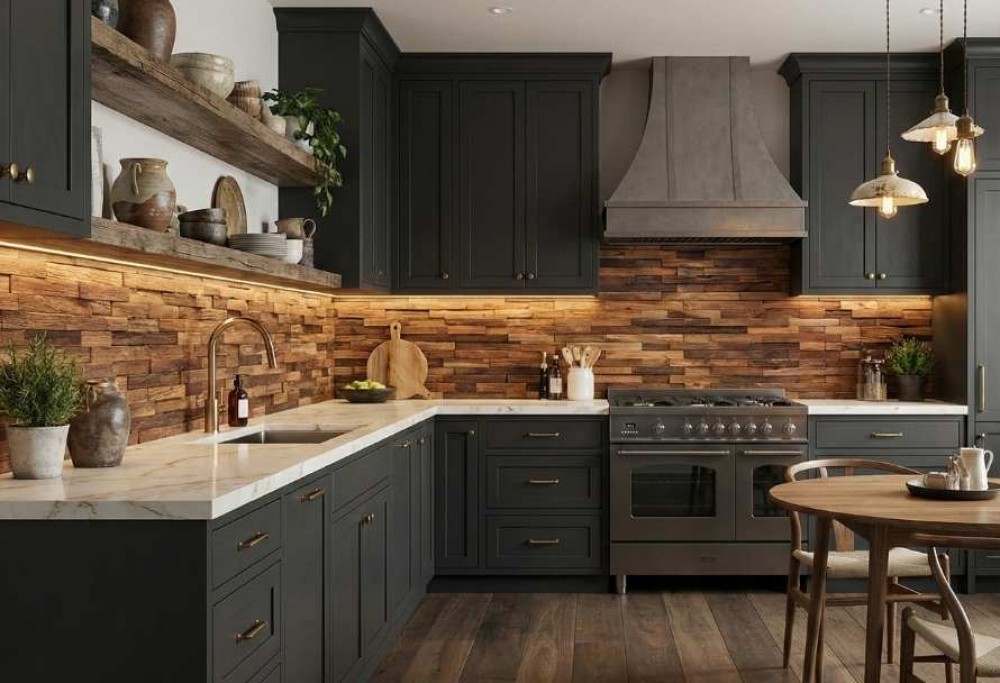
Everyday cooking in the kitchen has its less pleasant side: steam, splashing oil, grease deposits, high humidity and dirt that most often appears right behind the cooker. That’s why the question how to protect the wall in the kitchen next to a gas or induction cooker is extremely important when furnishing or renovating the interior.
A well-chosen wall protection affects not only aesthetics, but also ease of use, cleanliness and safety. The right material should be durable, resistant to high temperatures, easy to clean and matched to the overall design. Thanks to this, the kitchen can look fresh, neat and stylish for many years.
Why is it worth protecting the wall by the cooker?
The wall behind the cooker is a place particularly exposed to dirt. While cooking, grease, steam and small food particles settle on its surface. In the case of intensive frying, splashing oil can also be a problem, quickly leaving stains that are difficult to remove. If the wall is not properly protected, simply wiping it may not be enough, and frequent scrubbing will become burdensome.
Proper wall protection makes everyday cleaning much easier. A smooth and resistant surface makes it easier to keep things clean, reduces dirt penetration and allows you to quickly restore order in the kitchen after preparing meals. This is especially important in any kitchen that is used intensively by household members.
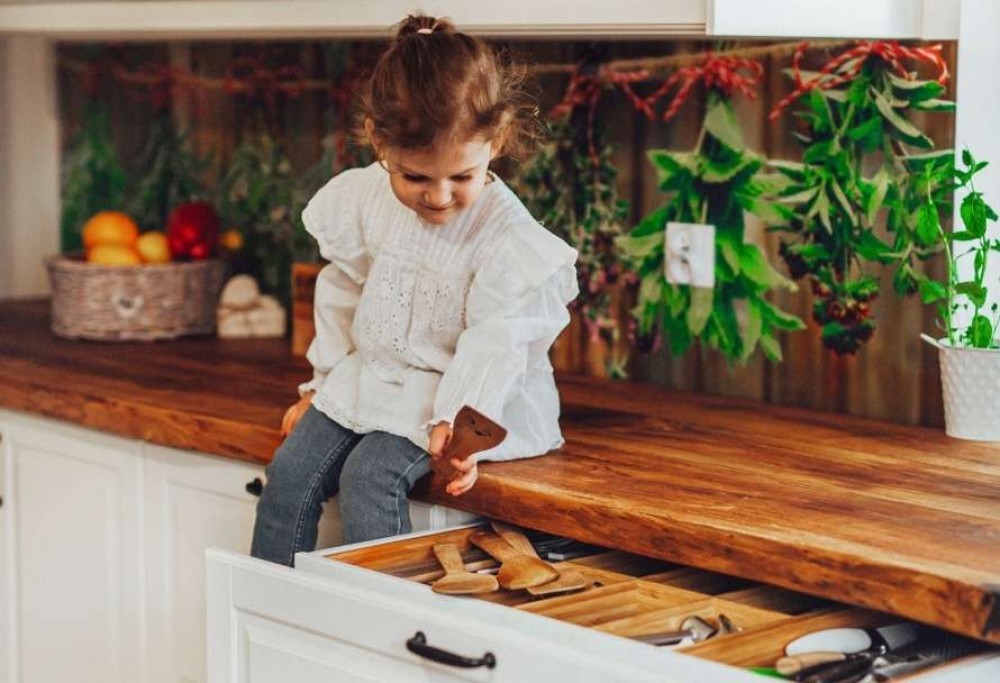
It is worth remembering that wall protection also affects the functionality of the entire interior. Well-chosen panels protect walls from moisture, dirt and temperature, while highlighting the appearance of furniture, the worktop and household appliances. In practice, this means that one well-thought-out solution can simultaneously improve working comfort and the aesthetics of the kitchen.
What to use to protect the wall next to a gas cooker?
With a gas cooker, the choice of material requires particular care. In this case, the wall is close to the heat source and sometimes also close to an open flame. Therefore, it is crucial that the material used is temperature-resistant, stable and safe for everyday use.
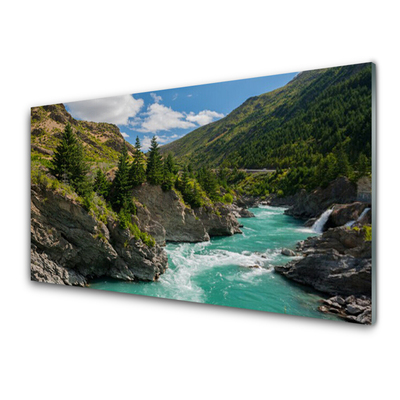
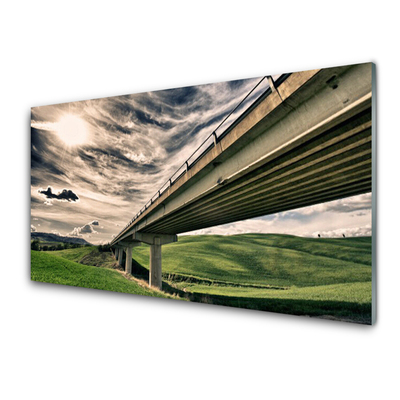
One of the most popular solutions is tempered glass. Using tempered glass behind a gas cooker can be very practical, because such a surface is smooth, elegant and easy to clean. Glass does not absorb grease, looks good in a modern design and can visually enlarge the interior. However, it must be remembered that it should be installed by a specialist, and the distance from the burners must comply with the manufacturer’s recommendations. With gas, a safe distance is extremely important due to the risk of overheating the material.
Ceramic tiles are also a very good choice. These are traditional solutions that are still popular due to their durability, wide range of patterns and good resistance to dirt. A wall finished with tiles or covered with ceramic tiles withstands everyday cooking well, and a properly selected grout can reduce the problem of dirt build-up. Tiles are practical, durable and available in many variants, making them easy to match to the style of the kitchen.
Another material that works very well behind a gas cooker is stainless steel. This solution is known from professional kitchens but is increasingly appearing in home interiors as well. Steel is resistant to high temperatures, moisture and dirt. Its raw look fits particularly well in industrial, loft and modern kitchens. Importantly, stainless steel is easy to keep clean, although streaks or fingerprints may be visible on its surface.
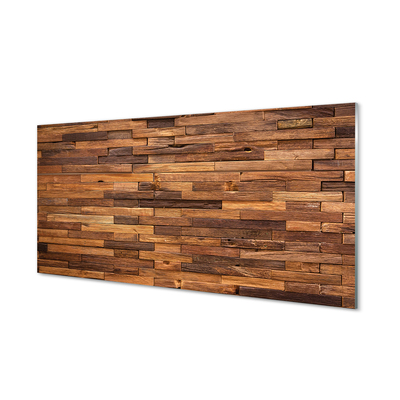
With a gas cooker, it is better to avoid materials that react poorly to heat or may be damaged by flame. Wood without proper protection will not be a good choice in the immediate vicinity of burners. If you want a natural effect, it is better to consider a wood-like material resistant to moisture and temperature or place wood at a greater distance from the cooking zone.
How to protect the wall by an induction hob?
An induction hob offers slightly more design freedom than a gas cooker. There is no open flame here, and the heat is concentrated mainly in the cookware. However, this does not mean that wall protection is unnecessary. During cooking, steam, grease and dirt are still produced, so protecting the wall by the induction hob is absolutely necessary.
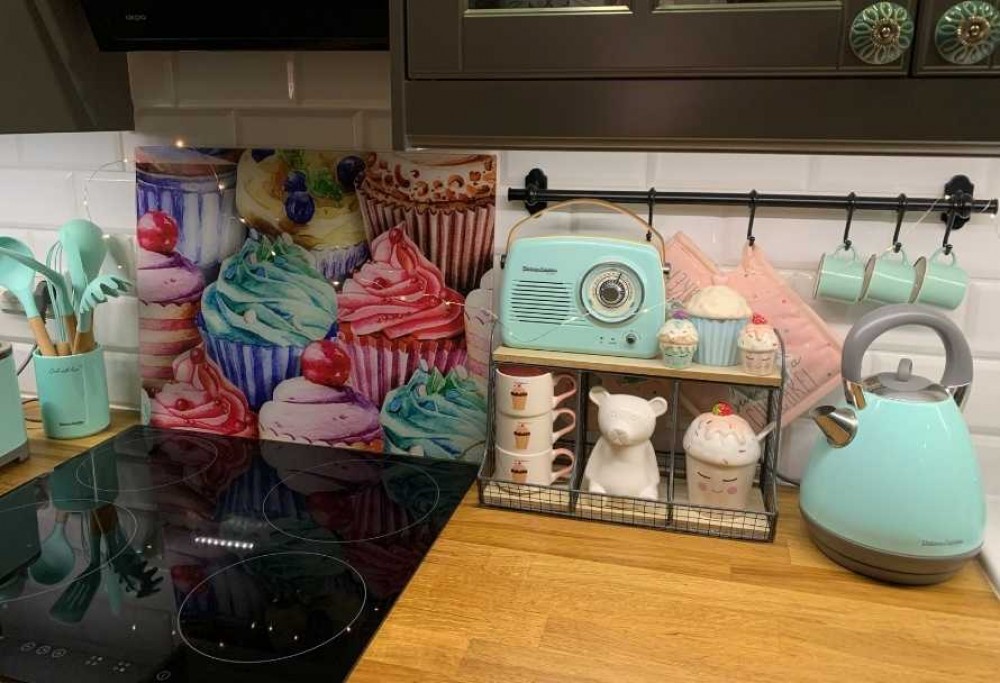
In the case of an induction hob, an ideal solution may be a tempered glass panel. This material is elegant, modern and extremely easy to clean. A soft cloth and a mild detergent are enough to remove most traces of cooking. Glass is available in many colours and patterns, so it can be matched both to a minimalist kitchen and a more decorative interior.
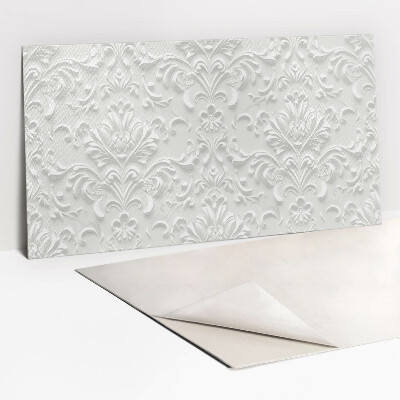
Laminated or composite panels designed for kitchens are also a good idea. Their advantages include relatively easy installation, a large variety of patterns and the possibility of matching them to the worktop. A panel in a colour similar to the furniture or visually connected to the worktop makes the entire built-in unit look coherent and elegant.
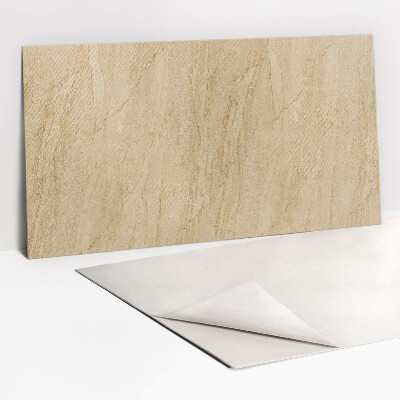
In modern interiors, stone or conglomerate is also increasingly used. These are very impressive, durable materials, resistant to everyday use. Stone goes beautifully with wood, white, black and metal accessories. Using it behind an induction hob makes the kitchen more elegant and luxurious. However, it should be remembered that natural stone may require impregnation in order to effectively protect the surface from stains.
With induction, you can allow yourself more decorative solutions, but one thing remains key: the material should be resistant to moisture, dirt and frequent cleaning. Not every decorative panel is suitable for installation in the cooking zone, so it is worth checking its technical parameters before purchasing.
The most popular materials for the wall behind the cooker
The choice of material for the wall behind the cooker affects the appearance, convenience and durability of the kitchen. Each solution has its advantages, so it is worth matching it to the type of cooker, the style of the interior and the intensity of cooking.
Tempered glass is a proposal for people who like a modern effect and appreciate easy cleaning. The smooth surface does not absorb dirt, and the lack of grout reduces the number of places where grime could accumulate. Glass can be transparent, frosted, coloured or printed, which offers great design possibilities.
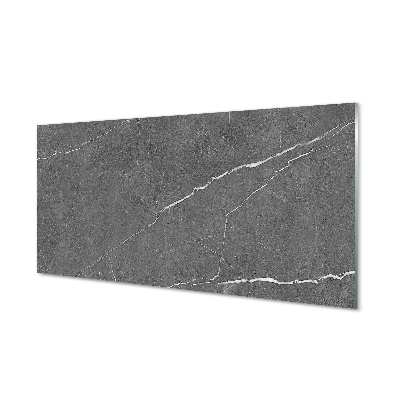
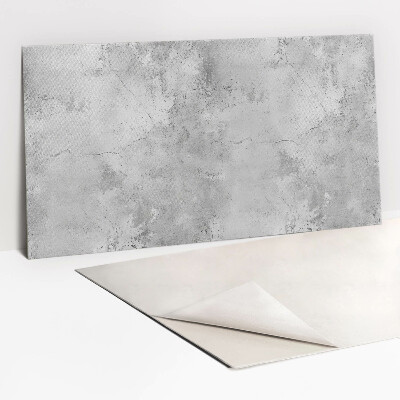
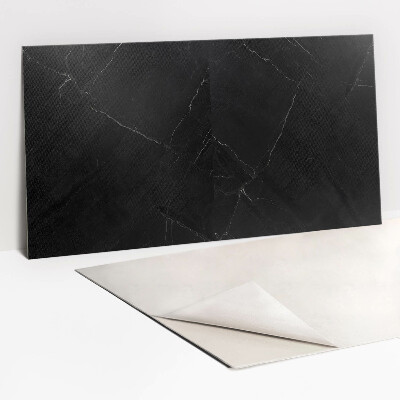
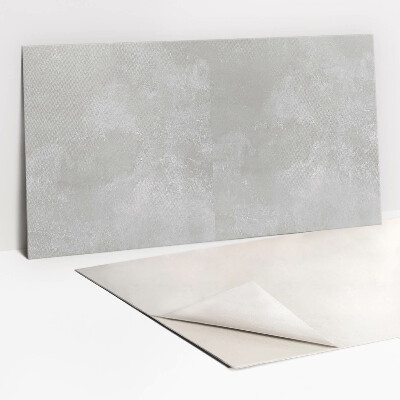
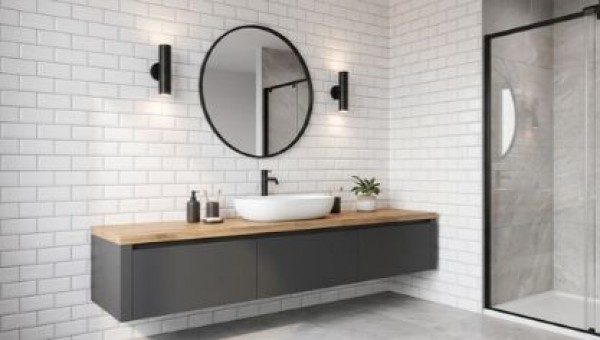
Ceramic tiles are one of the most commonly used materials. Their biggest advantages are resistance, durability and a huge selection of designs. You can choose classic white tiles, trendy metro tiles, decorative mosaics or large-format slabs imitating marble or concrete. This solution works well with both gas and induction cookers.
Stainless steel is a material for people who prioritise practicality and a professional kitchen character. It is resistant, durable and withstands high temperatures well. It fits perfectly in modern and industrial designs. Its cool look can be warmed up with wooden accessories or light cabinet fronts.
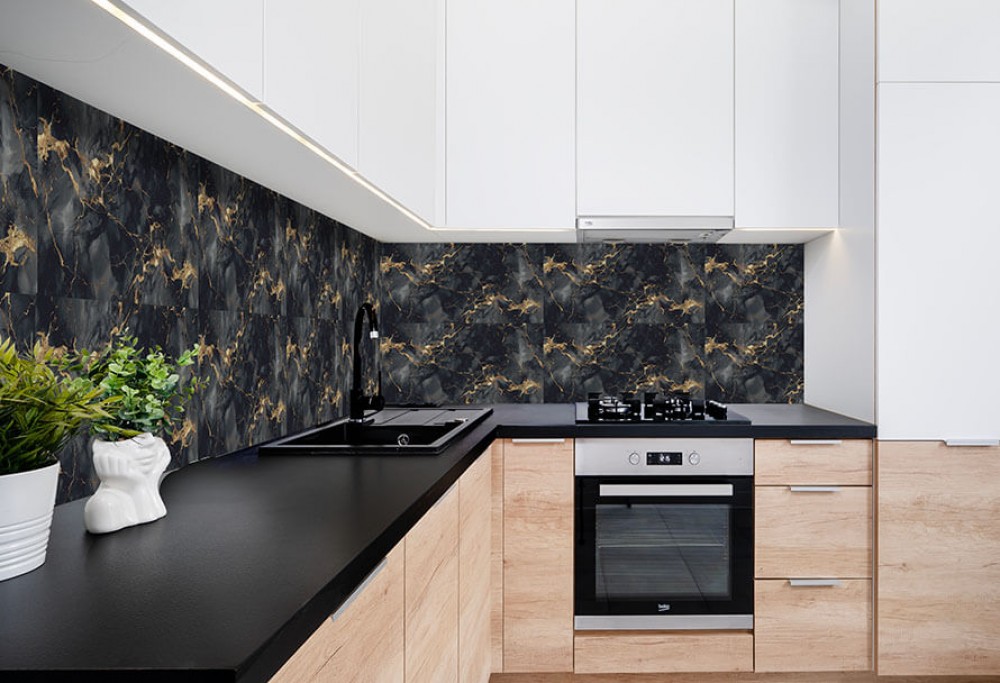
Natural stone or sintered quartz is a very durable and elegant solution. It works well in premium kitchens, where not only functionality but also exceptional aesthetics matter. Stone can be resistant to damage, but depending on the type it requires appropriate protection.
Washable paint is an economical option, but not always sufficient. High-quality kitchen paints are resistant to moisture and dirt, but in the direct area behind the cooker they may wear out more quickly. If you cook often, paint alone may not protect the wall as well as glass, tiles or steel.
Wood and wood-like materials introduce warmth and cosiness into the kitchen. However, they should be used wisely. Natural wood should be properly protected, and near a gas cooker you have to be especially careful about high temperatures and the risk of damage.
What to pay attention to when choosing wall protection?
When choosing wall protection behind the cooker, it is worth looking at the topic practically. Aesthetics are important, but in the cooking zone, durability, resistance and ease of cleaning are paramount.
The first criterion should be temperature resistance. With a gas cooker, the material must withstand high temperatures and the proximity of an open flame. With induction, the risk is lower, but you still have to remember about steam, grease and everyday dirt.
The second aspect is ease of cleaning. Smooth surfaces that can be quickly wiped with a damp cloth work best. The fewer gaps, grout lines and irregularities, the easier it is to keep things tidy. This is especially important in a kitchen where cooking is frequent and intensive.
Another issue is resistance to moisture and cleaning agents. The material behind the cooker should be resistant to regular washing, contact with detergents and accidental splashes. Thanks to this, the wall will remain attractive for many years and its surface will not require frequent repairs.
It is also worth paying attention to installation. Some solutions can be installed relatively quickly, while others require professional substrate preparation and precise fitting. Tempered glass, stone or stainless steel should be carefully measured, as later corrections can be difficult or costly.
One must not forget about matching the style of the interior. In a classic kitchen, tiles will work perfectly; in a modern one, glass or sintered stone; and in an industrial one, stainless steel. A well-chosen material affects the coherence of the entire design and emphasises the character of the room.
Safety is also crucial. The material used behind the cooker should be intended for use in the kitchen and resistant to the conditions prevailing in the cooking zone. In the case of gas, it is particularly important to maintain appropriate distances from the burners. This way, the wall protection will be not only attractive, but above all safe.
How to combine practicality with aesthetics?
A well-designed kitchen should not force you to choose between convenience and appearance. The best solution is one that simultaneously protects the wall, makes cleaning easier and suits the character of the interior. That is why it is worth treating the space behind the cooker as an important design element, not just a technical finish.
If the kitchen is small, a good choice may be light-coloured glass or glossy tiles. They reflect light and visually enlarge the space. In larger kitchens, you can opt for darker colours, striking stone or steel, which will give the interior a professional character.
In kitchens open to the living room, maintaining consistency is particularly important. The wall behind the cooker should match the worktop, cabinet fronts, floor and accessories. Thanks to this, everything looks harmonious and the cooking zone does not seem accidental.
It is also worth thinking long-term. A trendy pattern may delight for a while, but an overly intense decoration will quickly become tiresome. If you want a timeless effect, it is better to choose classic materials: glass, tiles, stone or steel. This is a choice that will look good for many years.
Wall protection by the cooker – what to choose for years to come?
The answer to the question how to protect the wall in the kitchen next to a gas or induction cooker depends on the type of appliance, the interior style and the daily habits of the household. The best options are materials that are resistant, durable and easy to clean. Properly chosen wall protection shields the surface, makes it easier to keep clean and affects the aesthetics of the entire kitchen.
In practice, the best choice is one that combines functionality with appearance. This way, the kitchen becomes not only beautiful, but also convenient, safe and ready for everyday cooking – without worrying about stains, grease and dirt that is difficult to remove.